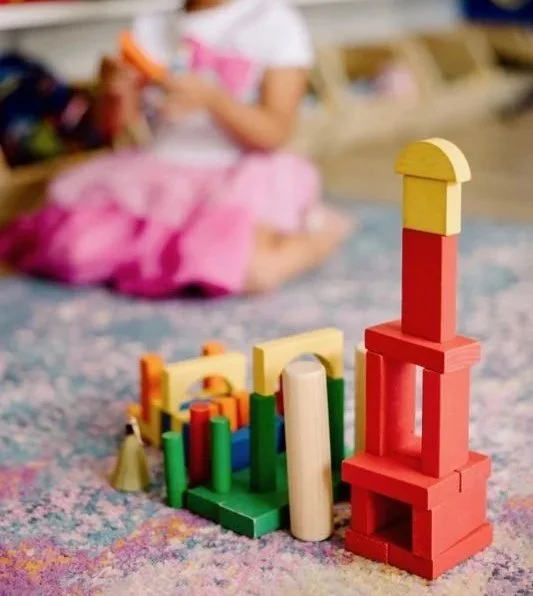
Why play?
Play isn’t something children do, it’s how they develop.
From infancy through adolescence, play is the primary mechanism through which the brain builds neural networks, social skills, and regulatory capacity — capabilities that stick with us across our lifetime. It provides children with a foundation for developing a sense of who they are and understanding how they differ from others.
-
Play shapes, strengthens, and organizes the developing brain. Through neuroplasticity—the brain’s ability to change in response to experience—play repeatedly activates and strengthens neural pathways involved in emotion regulation, attention, problem-solving, communication, movement, and connection. These repeated experiences support connection and coordination between different regions of the brain.
-
Play isn’t a singularly calm experience, and that’s what makes it regulatory. Play can contain excitement, tension, uncertainty, frustration, fear, surprise, aggression, joy, disappointment, connection, and relief. What makes it regulating is not the absence of activation, but the opportunity to move between these states without becoming overwhelmed or losing the underlying sense of safety.
It creates an opportunity to become highly activated and then discover: I can experience this feeling, stay connected, adjust, and come back. Repeated many times, this can build confidence in one's capacity to tolerate and recover from big feelings.
-
Play is a powerful social regulator. It teaches us to build trust, read social cues, take different perspectives, and navigate cooperation and competition. Through play, we learn to adjust to others while maintaining our own agency. Across cultures, play acts as a shared language, allowing us to connect, communicate, and create meaning together.
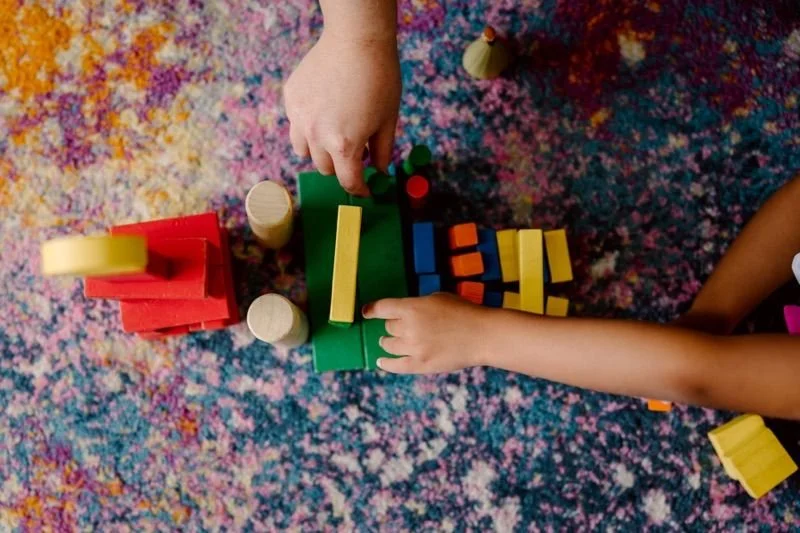
Play is how children make sense of the world,
and therapy makes that play meaningful.

What is
Therapy?
Play therapy is to children as counseling is to adults.
A psychotherapy that utilizes play as a primary natural language to express emotions — recognizing that children often express their inner worlds more naturally through action, imagination, and creative engagement than through words alone.

— The National Institute for Play
Play & The Nervous System
From a nervous system perspective, the activity of play is often a blended state of activation and relaxation — feeling energized and mobilized while simultaneously feeling safe, connected, and socially engaged. This mix of sympathetic and parasympathetic activation teaches the body that a little stress can be safe and manageable, strengthening nervous system flexibility and resilience.
Activation Without Danger

In play therapy, the therapeutic relationship and environment offer repeated opportunities to experience activation with enough safety & support to recover.
When a child feels threatened, frustrated, excited, ashamed, or uncertain, the autonomic nervous system adjusts the body's state and initiates changes in heart rate, breathing, muscle tension, attention, and readiness for action. In play therapy, these states may emerge naturally through themes like chasing, hiding, fighting, rescuing, nurturing, controlling, building, or destroying.
The goal is not to eliminate activation (a biological process). Rather, my goal is to help children experience activation (stress) without becoming overwhelmed by it, and gradually increase their capacity to regulate it over time.
The quality of the therapeutic relationship is one of the most important predictors in healing, as I function as a source of co-regulation for children. A predictable environment and responsive attunement communicates that big feelings are manageable.
Over time, regulation that initially requires another person can become increasingly self-directed — like noticing feelings, tolerating frustration, inhibiting impulses, seeking support, recovering from distress, and returning to play and social engagement.

How?
Serious, clinical work that looks and feels like play.
Research supports that CCPT is:
Strengths-Based
Helps children develop the emotional and relational resources they need to cope with difficult experiences: self-regulation, self-concept, coping, relationships, and resilience.
Culturally Sensitive
Follows the child’s lead and honors their cultural identity, values, family relationships, and lived experiences, adapting the therapeutic approach to their unique cultural context.
Developmentally Responsive
Utilizes children’s natural method of communication, play, to help them express experiences, emotions, needs, and concerns without relying solely on verbal language.
Neurodivergent-Affirming
Respects each child’s unique ways of communicating, processing, relating, and engaging—supporting authentic self-expression without requiring conformity to neurotypical expectations.
What’s your child’s favorite way to play?